Mobile connectivity has become an essential part of everyday life, especially as people increasingly rely on smartphones for navigation, communication, work, and access to digital services. As international travel resumes and expands, the limitations of traditional SIM cards are becoming more apparent. In response, eSIM technology is emerging as a practical solution that simplifies how users stay connected across borders.
The shift toward digital connectivity
For decades, physical SIM cards were the standard way to access mobile networks. Changing operators or using data abroad often meant swapping cards, dealing with roaming charges, or searching for local SIM options upon arrival. As devices became more compact and software-driven, this hardware-based approach started to feel outdated.
eSIM technology represents a natural evolution: connectivity managed digitally, without the need for physical components.
What is eSIM technology?
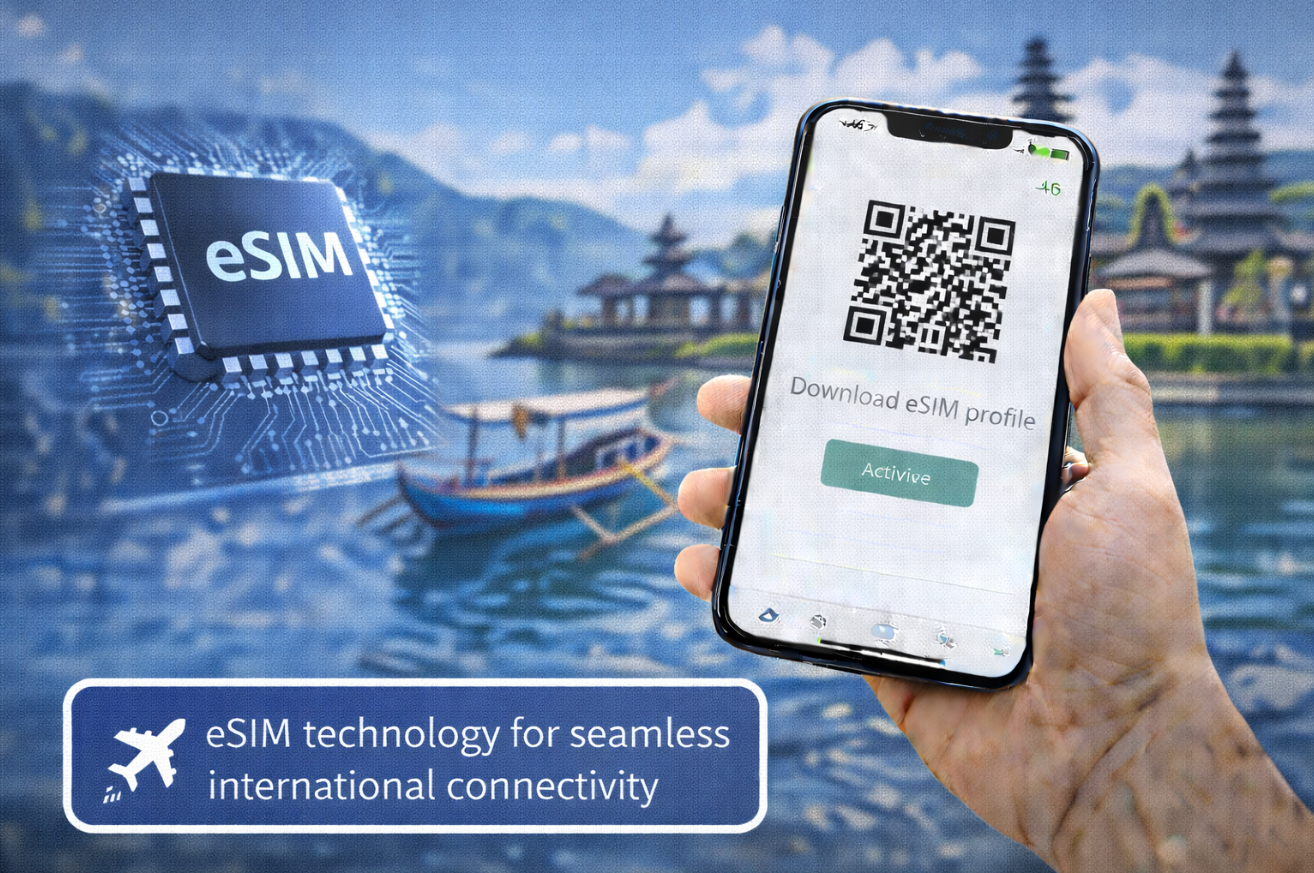
An eSIM (embedded SIM) is a programmable chip built directly into a device. Instead of inserting a removable SIM card, users download a digital network profile that allows the device to connect to a mobile network.
Functionally, eSIM performs the same role as a traditional SIM—it authenticates the device on a network—but it does so through software. This allows users to activate, switch, or manage data plans remotely, often in just a few minutes.
How eSIM works in practice
To use an eSIM, a user selects a compatible data plan and installs it on their device, usually by scanning a QR code or using a dedicated app. Once activated, the device connects immediately to the network.
Most modern smartphones support multiple eSIM profiles, which means users can store several plans at once and switch between them without changing hardware. This is particularly useful for people who travel frequently or move between regions.
Key advantages of eSIM for international travel
eSIM technology offers several advantages over traditional SIM cards, especially when traveling:
- No physical SIM swapping
Users don’t need to remove or store small cards while switching plans. - Remote activation
Connectivity can be set up before departure or upon arrival. - Multiple profiles on one device
Ideal for managing different data needs across countries. - Improved convenience and security
Embedded SIMs reduce the risk of loss or theft.
These benefits make eSIM a flexible option for modern travelers who want to stay connected without added complexity.
Why eSIM makes sense when traveling to Indonesia
Indonesia is a diverse destination made up of thousands of islands, with travelers often moving between cities, coastal regions, and rural areas. Reliable mobile data supports essential tasks such as navigation, accessing transport services, communicating with hosts, and using online tools on the go.
Planning connectivity in advance can help avoid reliance on inconsistent public Wi-Fi or expensive roaming options. In this context, solutions such as Holafly’s esim to travel to Indonesia illustrate how eSIM technology can be applied to real-world travel connectivity needs, allowing users to access mobile data without changing physical SIM cards.
Devices that support eSIM
eSIM technology is now supported across a wide range of devices, including:
- smartphones,
- tablets,
- laptops,
- smartwatches and other connected wearables.
As manufacturers continue to adopt eSIM-only designs, support for embedded connectivity is expected to grow further.
The future of mobile connectivity
The rise of eSIM reflects a broader shift toward software-defined connectivity. Beyond travel, eSIM plays a growing role in areas such as remote work, enterprise mobility, and the Internet of Things (IoT), where managing large numbers of connected devices efficiently is critical.
As networks become more digital and flexible, eSIM technology is likely to become the standard rather than the exception.
A more flexible way to stay connected
eSIM technology simplifies mobile connectivity by removing physical limitations and putting control in the hands of users. For international travelers, this means fewer barriers, faster setup, and a more seamless digital experience.
As global mobility increases, eSIM stands out as a key innovation shaping the future of how people connect—wherever they go.