
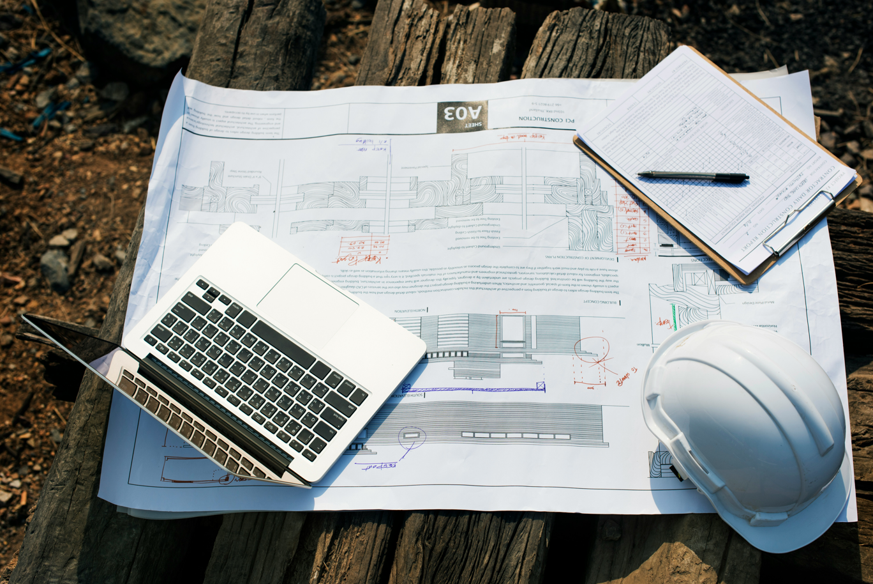
Walk onto a construction site in 2026, and you will notice something different right away. The clipboard is gone. The crew foreman is not hunting for the latest blueprint revision buried in a stack of papers. Someone is piloting a drone overhead while a project manager reviews live progress data on a tablet. The job site looks the same on the surface, but the way it runs has changed completely.
Construction has spent years earning a reputation for slow adoption. That reputation is starting to crack, not because the industry went looking for change, but because the cost of avoiding it got too high. Delays, rework, safety incidents, and labor shortages pushed contractors to view technology not as a nice extra but as a way to stay in business.
These five technologies are doing the most to move the needle on job site efficiency right now.
1. How project management software became the new blueprint
For most of the last century, a construction project was run on paper, over the phone, and by experience. The foreman knew the job. If something changed, you found the foreman. That system worked until projects got complicated enough that one person’s memory could not hold it all.
Project management software replaced that informal network with something everyone on the team can access, update, and trust. When a subcontractor finishes a task, that update appears instantly for the general contractor, the architect, and the owner. Nobody waits for a Friday report to find out where things stand.
Fieldwire’s blog post on construction management tools gives a solid overview of how these platforms work across different project types, from residential builds to large commercial developments. The short version is that the right software connects scheduling, punch lists, RFIs, and document control in one place, so the team stops managing information and starts managing the work.
Adoption of this category has accelerated sharply. Teams that resisted these tools during the pandemic caught up fast when they saw competitors closing out projects faster with fewer change orders.
2. Drones and the death of the site walk
Before drones, a project manager who wanted to know the real state of a site had to walk it. That walk took time, produced inconsistent documentation, and left gaps. A photo from the ground tells you what one person decided to photograph. A drone flight tells you everything.
Modern construction drones can survey a full site in under an hour and produce orthomosaic maps accurate to within a few centimeters. Project managers use that data to track earthwork progress, verify material stockpiles, and spot problems before they turn into delays. You see this playing out most clearly on large infrastructure jobs where the site is too big to walk efficiently and too complex to track by memory.
The data does not stay on the drone. It feeds directly into the project management platforms and BIM models the team is already using. That connection matters. A survey that lives in isolation is just a picture. A survey that fits your schedule and model is an early warning system.
The case for using digital tools to scale faster applies here as clearly as anywhere in construction. Drones reduce the cost of information gathering and make that information more reliable. That combination is what pushes efficiency forward.
3. Building information modeling and why it finally clicked
BIM has been around long enough that skeptics used to call it a solution looking for a problem. The early versions were hard to use, required expensive hardware, and demanded a level of coordination that most project teams were not set up for. That started to change when cloud-based platforms made the models accessible from any device on-site.
The core idea behind BIM is that you build the project twice. Once in the model, you find the clashes and coordination problems. Then, for real, where you do not. Every hour spent resolving conflicts in the model saves several hours of on-site rework. On a dense urban project with mechanical, electrical, and plumbing systems packed into tight ceiling spaces, that trade-off pays for itself fast.
Construction tech encompasses a diverse range of tools and software, with adoption on the rise across the sector. Facts about construction technology show that BIM sits at the center of that shift, with usage climbing steadily across commercial and infrastructure projects worldwide. The holdouts are shrinking, partly because owners are now requiring BIM deliverables as a condition of contract.
The other shift is that BIM is no longer just a design tool. Contractors use it for site logistics, phasing, and even safety planning. The model shows where materials will be staged, how cranes will swing, and which work sequence keeps trades out of each other’s way.
4. Wearables and the changing shape of site safety
A construction fatality is not just a tragedy for the individual and their family. It shuts down a project, exposes the contractor to liability, and leaves a mark on everyone who worked on the site. The industry has poured enormous effort into safety culture over the past two decades, and the fatality rate has dropped. Wearable technology is now pushing that work further.
Smart hard hats, vests with biometric sensors, and GPS-enabled wristbands give safety managers real-time data on where workers are, how their bodies respond to heat and physical strain, and whether anyone has had a fall or sustained an impact. When a sensor detects an unusual reading, an alert goes out immediately. The supervisor does not find out at the end of the shift. They find out in seconds.
This matters most on large projects with hundreds of workers spread across multiple zones. Tracking that many people manually is not practical. A wearable network does it automatically, and the data it produces over time shows patterns that human observation would miss, which areas generate the most near-misses, which tasks spike fatigue readings, and which times of day carry the highest risk.
Contractors who have rolled out wearables consistently report fewer recordable incidents. The technology does not replace safety training or supervision. It gives those things more information to work with.
5. Prefabrication and the factory coming to the job site
Construction productivity has not kept pace with other industries for decades. One reason is that traditional site work is inherently inefficient. Workers wait for other crews to finish before they can start. The weather stops work. Material deliveries arrive late. The sequence is fragile.
Prefabrication attacks that fragility at its root. When components get built in a controlled factory environment, the variables that slow site work disappear. A mechanical skid assembled off-site arrives ready to drop into place. Wall panels with windows and insulation installed do not wait for a carpenter and a glazier to coordinate their schedules on a windy Tuesday. The work gets done faster, with better quality control, and with far less waste.
The growth of modular construction is the most visible example of this logic at scale. Entire hotel rooms, hospital wards, and residential units get built in a factory and then stacked on site in days. The reduction in on-site labor hours is real, and so is the reduction in construction waste, which matters more each year as disposal costs and environmental regulations tighten.
Prefabrication also changes what skilled labor does on-site. Fewer workers spend time on repetitive assembly. More of the skilled hours go toward coordination, quality checks, and the tasks that genuinely require hands-on problem-solving in the field.
The bigger picture
None of these five technologies works in isolation. The projects getting the most out of them are the ones that treat them as a connected system. Drone data feeds the BIM model. The BIM model informs prefabrication planning. Project management software ties it all together and keeps the team moving on the same set of facts.
The construction industry is not going digital all at once. Some firms are ahead, some are still catching up, and plenty of jobs still run on habits built over decades. What has changed is the gap between the two groups. Teams that adopt these tools complete projects faster, with fewer change orders, and with better safety records. That gap is wide enough now that it shows up in bid results and client relationships.
The technology will keep moving. Robotics, AI-assisted scheduling, and autonomous equipment are already in pilot on large projects. The firms that built their systems around the tools described here will be better positioned to add those as they mature. The ones that waited will be catching up again.

By Srdjan Gombar
Veteran content writer, published author, and amateur boxer. Srdjan has a Bachelor of Arts in English Language & Literature and is passionate about technology, pop culture, and self-improvement. In his free time, he reads, watches movies, and plays Super Mario Bros. with his son.