

Printing is part of everyday work for many businesses, whether employees are producing reports, forms, presentations, marketing materials, or other documents. As printing needs grow, however, managing equipment, supplies, maintenance, and different types of print jobs separately can become difficult. Employees may spend time finding devices, replacing supplies, or arranging repairs instead of focusing on their regular responsibilities.
Managed print services bring these responsibilities into one coordinated printing solution. Instead of treating every printer, supply order, or print job as a separate task, the service connects the equipment and support a business needs to keep its printing organized.
The process starts with understanding printing requirements and continues through equipment, supplies, maintenance, different print jobs, and ongoing adjustments. Here are five connected areas that explain what managed print services are and how they work in business.
1. Identifying The Business’s Printing Needs

The process starts with understanding what a business actually needs to print. Different departments may have different requirements, with some producing contracts and reports while others handle presentations, marketing materials, signs, or other visual content.
These needs also vary in volume. A department that prints hundreds of pages each day may require different equipment and support from one that only produces documents occasionally. Understanding these differences helps establish a printing approach that fits the work.
The requirements may include everyday documents, high-volume printing, scanning and copying, marketing materials, and oversized signs or posters.
Specialized requirements may also call for large format printing, particularly when businesses need large graphics, displays, or materials that standard office printers cannot handle effectively.
Once these needs are clear, the next step is determining what equipment and services are needed. It gives the business a clearer starting point for organizing its print environment.
2. Providing Suitable Printing Equipment
With the printing requirements established, managed print services bring appropriate equipment into the overall solution. Different printers and multifunction devices are designed for different workloads, document types, and workplace requirements, so the right combination depends on how the business prints.
A typical setup may include printers, copiers, scanners, or multifunction devices for different departments and tasks. Some equipment may handle everyday documents, while other devices support higher-volume or specialized work.
The setup can also account for network printing, scanning, copying, secure document release, user access, and different workloads.
This approach connects equipment directly to the purpose behind it. Employees have access to devices suited to their work, while the business has a more organized way to manage printing.
But equipment alone does not keep printing running. Once devices are in place, they also need the right supplies and ongoing support. The goal is a setup that supports daily work without unnecessary complexity.
3. Keeping Supplies And Equipment Supported
The printers require supplies like toner, ink, and paper to continue printing documents. Maintenance is also needed on equipment when parts become old or an appliance has a fault. Handling such requirements individually may impose more work on employees and complicate the process of solving minor problems.
Managed print services integrate these requirements into the overall printing solution. Maintenance and repair needs can be handled as equipment needs work, and supply needs can be monitored and refilled.
This support can include toner, ink, paper, basic maintenance, troubleshooting, repairs, and replacement equipment.
The advantage here is that there is a systematic method of maintaining equipment in proper working condition and in a state of daily use. When supplies and maintenance are treated as the same service, employees are not required to perform as many different print tasks.
The same support also forms the basis of managing any kind of print work that a business might require.
4. Supporting Different Types Of Print Work
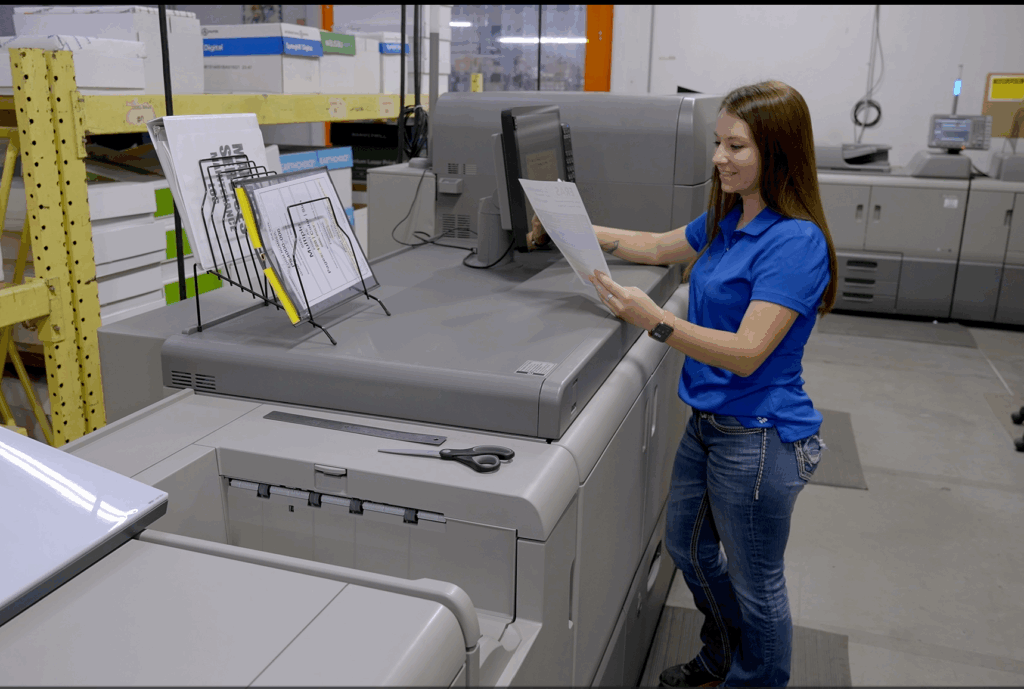
Not all business printing needs are similar. Most of the work might consist of routine documents, though brochures, presentations, signs, graphics, posters, or other specialized materials may be required in departments.
These requirements can be incorporated into the broader printing strategy by managed print services. Everyday documents might be done on standard office equipment, whereas special equipment or printing capabilities might be needed when a project needs a different format, size, or quantity of output.
As an illustration, an administrative team might create forms and reports, whereas marketing might require graphically detailed campaign materials. By treating the two requirements as a common print environment, businesses are able to select a proper solution for each type of work.
This adaptability implies that the printing system can accommodate the variety of materials a company uses in the course of its regular operations.
Once those needs are supported, the last step is to maintain the arrangement in a manner that is appropriate as the business evolves.
5. Adjusting The Print Environment Over Time
Business printing needs are rarely fixed. A department may grow, printing volumes may increase, new equipment may become necessary, or a business may begin producing materials it did not need before.
Managed print services provide an ongoing framework for responding to those changes. Equipment, supplies, maintenance, and other printing requirements can be reviewed as needs develop, helping the printing environment remain appropriate as needs change over time. For example, a UK government department has documented the use of a managed print solution across its offices as part of its approach to workplace printing. Read the government’s overview of its managed print service.
For instance, a business may find that an existing printer no longer handles a department’s workload efficiently, while another device is rarely used. These changes can indicate that the current arrangement needs adjustment.
This makes managed print services an ongoing solution rather than a one-time setup. The service remains connected to business printing needs, allowing the arrangement to evolve.
Conclusion
Managed print services bring the elements of printing into one coordinated solution. The process begins by understanding what a business needs to print, then connects those requirements with suitable equipment, supplies, and support.
From everyday documents to specialized materials, the approach can accommodate different print work while keeping equipment operating. As workloads and business requirements change, the printing environment can also be adjusted.
In this way, managed print services are not simply about supplying printers. They provide an organized approach to handling the equipment, resources, support, and printing needs that keep business operations moving. That structure can simplify printing management.