
The conversion challenge facing e-commerce brands has shifted. Where static product photography once sufficed, customer expectations have evolved dramatically. Shoppers increasingly expect dynamic video demonstrations before purchasing—they want to see products from multiple angles, understand how they function, and visualize them in realistic contexts.
Yet most e-commerce operations lack the resources to produce professional video content for their full product catalog. The result: brands with hundreds or thousands of SKUs typically feature video for only their top-selling items, leaving most products with static images that underperform against video-enabled competitors.
How AI Video Generation Enables Catalog-Wide Video Coverage
The practical opportunity here is substantial. Most e-commerce brands already possess high-quality product photography for their entire catalog. This photography is typically shot in controlled studio environments with professional lighting, white backgrounds, and multiple angle coverage. It represents a significant existing investment in content creation.
The missing piece isn’t photography—it’s video. Converting static product images into dynamic video demonstrations has traditionally required either reshooting products with video equipment (expensive and time-consuming) or manually animating static images (technically complex and labor-intensive).
MiniMax H3 Max on Pollo AI addresses this gap directly. By accepting product images as input and generating video that maintains professional light and shadow rendering while adding motion, the model transforms existing photography into video content. A brand can feed its product catalog into the system, specify desired video characteristics (product rotation, lifestyle context, feature highlighting), and receive video output suitable for e-commerce platforms.

What distinguishes this approach from earlier AI video tools is the quality of product representation. MiniMax H3 Max on Pollo AI demonstrates sophisticated understanding of product light and shadow, maintaining realistic material properties as products move through space. For jewelry, this means preserving the realistic sparkle and reflection of precious materials. For electronics, this means maintaining the accurate appearance of screens and surfaces. For apparel, this means preserving fabric texture and drape characteristics.
The model also supports hybrid image-text input, allowing brands to specify both visual reference materials and detailed product descriptions simultaneously. This means you can provide a product image plus copy describing key features, and the model generates video that showcases both the visual appeal and the functional benefits. A kitchen appliance video might show the product’s design aesthetic while also demonstrating its key features in use.
Implementing Catalog-Scale Video Production
Successfully producing video at catalog scale requires systematic process design rather than ad-hoc video generation. The most effective approach treats video creation as part of standard product content workflows.
Step One: Audit and Organize Your Product Image Library
Begin by assessing your existing product photography. Identify which products have high-quality studio photography suitable for video generation and which require supplementary materials. Most e-commerce operations find that 70-90% of their product photography is suitable for direct video generation; the remainder may require minor optimization or supplementary context images.
Organize your product library systematically, noting which products require lifestyle context (products that benefit from showing use cases) versus pure product-focused video (products where the product itself is the focus). This categorization informs your video generation approach.
Step Two: Develop Product-Specific Video Briefs
Rather than creating one generic video template, develop category-specific video briefs that highlight the unique selling points of different product types. A clothing brand’s video brief emphasizes fit and material texture. A beauty brand’s video brief emphasizes color and application. A home goods brand’s video brief emphasizes scale and functionality.
Document these briefs clearly so they can be applied systematically across products within each category. This ensures consistent video quality and messaging across your catalog while reducing the time required to specify individual videos.
Step Three: Generate Video in Batches
Rather than generating videos one at a time, batch your video generation by product category. This allows you to maintain consistent visual style within categories while potentially varying style between categories. Generate 20-30 videos at once, review them for quality and brand alignment, then proceed to the next batch.
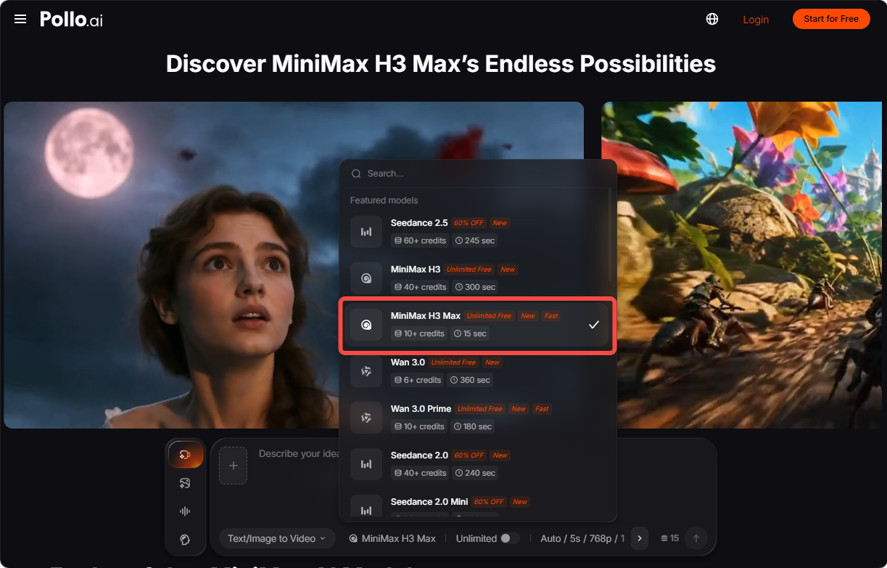
MiniMax H3 Max on Pollo AI’s speed advantage is critical here: you can generate a month’s worth of catalog video in a single afternoon, rather than spreading production across weeks. This concentration of effort makes quality control easier and allows you to adjust your approach mid-process if needed.
Step Four: Optimize Video for Platform Requirements
Different e-commerce platforms have different video specifications. Some platforms prefer vertical video, others horizontal. Some support sound, others are silent-optimized. Some allow 30-second videos, others require shorter clips.
After generating your core video assets, optimize them for your specific platform requirements. Many videos can serve multiple purposes: a full-length product demonstration video can be cut into shorter clips for social media advertising, vertical versions for mobile platforms, and silent versions for platforms where sound isn’t supported.
Enhancing Your Source Materials for Video Generation
As you scale product video generation, the quality of your input photography directly impacts output quality. Product images that are crisp, detailed, and well-lit produce superior video compared to images with any blur, noise, or unclear details.
Many e-commerce operations inherit product photography from various sources: some shot in-house, some from vendors, some from older product iterations. This mixed sourcing often means some product images are less crisp than ideal—perhaps slightly out of focus, compressed for web, or shot under less-than-perfect lighting conditions.

Pollo AI’s Instantly Unblur Photo Online for Free tool provides practical optimization for these materials. By enhancing image clarity, sharpening product details, and improving overall image quality, you ensure your video generation starts with the best possible source materials. A product image that’s slightly soft becomes crisp and detailed. Text on product packaging becomes clearly readable. Material textures become more pronounced.
The workflow is simple: identify product images that would benefit from clarity enhancement, process them through the unblur tool, then use these optimized images as inputs for MiniMax H3 Max on Pollo AI video generation. This preprocessing step takes minutes per image but noticeably improves the final video quality, particularly for products where detail clarity directly impacts purchase confidence.
Building Sustainable Video Content Operations
The transition from selective video coverage to catalog-wide video represents a significant operational shift. Sustainable implementation requires building systems that integrate video generation into ongoing product management workflows.
Establish clear processes for new product launches: when a new product is added to your catalog, video generation is triggered automatically as part of the standard content workflow. Assign responsibility for video quality review and platform optimization. Create feedback loops that track which videos drive the highest conversion rates, informing improvements to video generation briefs over time.
Most importantly, recognize that this is not a one-time project but an ongoing operational capability. As your product catalog evolves—products are added, removed, updated—your video library evolves accordingly. This requires sustainable processes, not one-off production efforts.
Conclusion: The Competitive Advantage of Complete Visual Coverage
The transition from selective video coverage to catalog-wide video represents a significant competitive shift in e-commerce. Brands that achieve video coverage across their full product catalog gain measurable advantage in conversion rates, customer confidence, and ultimately revenue. The economics of this transition have fundamentally changed. Where professional video production once made catalog-wide coverage economically impossible, AI-powered video generation makes it not just feasible but economically attractive.
Brands that recognize this shift early—implementing systematic processes to produce high-quality video for their entire catalog—position themselves to outcompete slower-moving rivals. The competitive window for meaningful advantage through this capability exists now. Forward-thinking e-commerce operations are already making this transition. The question is whether your brand will lead this shift or follow it.