The wearable tech category spent years being more hype than habit. Smartwatches took a while to justify their price tags. Fitness bands lived on wrists for a few months before quietly disappearing into drawers. Early smart glasses were a punchline. And fitness rings, for all their promise, mostly appealed to a very specific kind of obsessive data tracker.
But something has shifted. AI has changed the calculus entirely — and a new wave of wearables is landing that actually fits into real life rather than asking you to rearrange your life around it. These aren’t devices that demand your attention. They work in the background, or stay comfortably out of the way until you need them. Here’s what’s earning a genuine place in people’s daily routines right now.
The Case for Eyes-Up Technology
One of the biggest selling points of AI-assisted wearables is their ability to keep you present. Your phone pulls you down and in. You pick it up to check the time and put it down fifteen minutes later having done something else entirely. A good wearable keeps your eyes forward.
That’s the core appeal of the current generation of smart AI glasses — they wear like a regular pair of sunglasses, but give you hands-free access to an AI assistant, built-in speakers, and a camera that can capture moments the second they happen. No fumbling for your phone, no missing the shot because the app wasn’t open. For creators, travellers, commuters, and anyone who finds themselves saying “I wish I’d filmed that,” the form factor is genuinely compelling.
The practical applications stack up fast. Ask your glasses a question while you’re cooking and keep both hands free. Take a photo of something in a shop to look up later without making it awkward. Get turn-by-turn audio directions while you walk through an unfamiliar city without staring at a map. These are small things, but small things done frictionlessly have a way of becoming habits.
The design has also come a long way. These aren’t the bulky, conspicuous prototypes of five years ago that announced themselves from across a room. Current versions sit comfortably, look like eyewear you’d actually choose to wear, and manage battery life across a full day of use. That last part matters more than people give it credit for — a wearable that dies by 3pm doesn’t earn a permanent spot in your routine.
Earbuds Are Getting Smarter Too
Audio wearables have had a quieter but steady evolution running in parallel. Beyond noise cancellation and spatial audio — both of which are now genuinely excellent in mid-range options — the latest generation of earbuds is starting to add real-time translation, live transcription, and context-aware assistance.
For remote workers in back-to-back meetings, travellers navigating language barriers, or anyone who needs a reliable way to stay focused in noisy environments, earbuds that can do more than play music are starting to feel less like a gadget and more like infrastructure. For creators already leaning into AI video tools for production, smart earbuds that handle transcription and translation on the fly are a natural next step.
The conversation control features are particularly interesting. The better earbuds now detect when you’re speaking to someone nearby and automatically reduce audio, then pick back up when you’re done — without you needing to touch anything. It’s a small detail, but it’s the kind of thing that makes a device feel intelligent rather than just expensive.
The trick is finding a pair that does all of this without compromising on the thing earbuds have always needed to get right: sound quality. The market is competitive enough now that you no longer have to sacrifice one for the other, even at mid-range price points.
Smartwatches Have Finally Found Their Groove
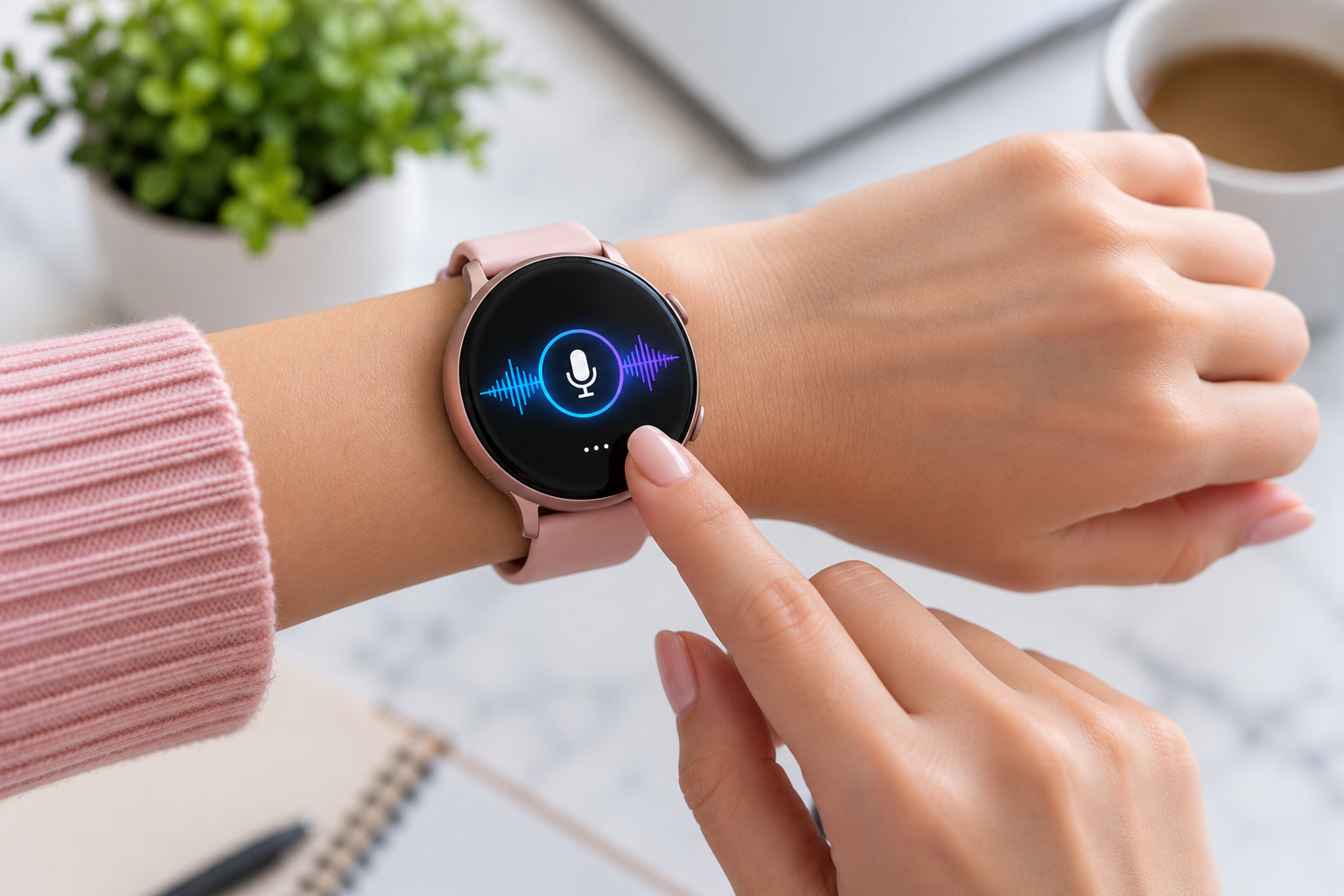
It took the better part of a decade, but smartwatches are now doing things that genuinely change how people manage their health. Continuous heart rate monitoring, blood oxygen tracking, sleep staging, and stress detection have moved from novelty to genuinely useful data. Sleep research has consistently found that tracking these metrics over weeks and months reveals patterns that a single doctor’s visit or a night of observation simply can’t — especially as more people shift their attention toward recovery and long-term wellbeing rather than just daily step counts.
The watches that are winning aren’t the ones with the longest spec sheets. They’re the ones that surface the right data without overwhelming you with it. Fewer notifications. Cleaner dashboards. More intelligent defaults. Nudges rather than alerts. It’s a lesson the whole wearable category needed to learn: more information is not always more useful.
Workout tracking has also reached the point where dedicated GPS fitness watches can feel redundant for casual to moderate athletes. If you’re not training for a triathlon, the accuracy and feature set on a modern general-purpose smartwatch is more than enough — and you get the added benefit of it being something you’d wear on a night out as well as a morning run.
The Fitness Ring: A Dark Horse Worth Watching
One category that’s quietly earned serious credibility is the smart ring. Small, comfortable to sleep in, and with impressive battery life compared to most wrist-based wearables, rings have carved out a niche among people who want health data without the bulk or the distraction of a screen.
The tradeoff is limited interactivity — a ring can track and report but can’t really display or respond. For people who are already overwhelmed by the number of screens in their lives, that’s not a tradeoff at all. It’s the feature.
If the idea of a more passive, background-running approach to health monitoring appeals to you, the smart ring category is worth a look. Several options have now hit a level of accuracy that makes the data genuinely worth acting on.
The Experiences Wearables Make Better
The clearest way to understand what modern wearables are actually for is to look at where they genuinely change something — not in controlled demos or spec sheets, but in real, everyday situations where having the right device on your wrist or face makes a tangible difference.
Travel is one of the most compelling examples. Navigating a new city with audio directions playing through smart glasses while your hands are free to carry bags, take photos, or gesture your way through a conversation is a meaningfully different experience from squinting at a phone screen on a busy street. Real-time translation earbuds have turned interactions in foreign countries from stressful to genuinely enjoyable for people who previously defaulted to silence or frustrated sign language.
Sports and outdoor adventures are another area where wearables have truly found their footing. According to fitness tracking research from Harvard Health, wearable tracking consistently improves adherence to exercise goals — not because data is intrinsically motivating, but because it creates a feedback loop that helps people make small, consistent adjustments over time. Whether you’re a casual jogger or a weekend hiker, having a device that responds to how your body is actually performing changes the experience entirely.
Creative work has shifted too. Photographers, videographers, and social content creators have found genuine utility in wearables that let them capture first-person perspectives without staging a shot. The hands-free nature of smart glasses means you can document a moment as you live it rather than stepping outside it to document it. For travel creators especially, that distinction shapes the quality and authenticity of the content they’re able to produce.
Even mundane daily routines benefit more than people expect. Checking a notification with a glance at your wrist rather than a full phone unlock. Finishing a workout and having it automatically logged. Waking up to a recovery score that gives your day a sharper starting point. These small efficiencies add up faster than you’d think.
How to Actually Pick One
The most common mistake people make when buying wearables is starting with the device rather than the problem. Pick the category that addresses something you actively find frustrating in your current setup.
Hate pulling your phone out constantly? Start with glasses or a watch. Struggle with focus in noisy spaces? Earbuds. Want a clearer picture of your sleep and recovery without adding another screen to your life? A ring or a simple fitness tracker might be all you need.
Once you’ve identified the problem, then look at the options in that category. Read reviews that mention long-term use rather than just first impressions — wearables often reveal their weaknesses after a few weeks, not a few days.
The Bigger Picture
What’s interesting about this moment in wearables is that the technology has finally caught up to the vision. The early pitches — always-on AI assistance, hands-free capture, ambient health awareness — were never wrong. They were just premature. The hardware wasn’t small enough, the batteries weren’t powerful enough, and the AI wasn’t smart enough to make any of it feel effortless.
The gap between what wearables promised and what they delivered has narrowed substantially in the past two years. The devices landing now are lighter, smarter, longer-lasting, and more stylish than anything that came before them. And crucially, they’re more interoperable — the wearable ecosystem is starting to mirror what’s happening in scalable tech infrastructure more broadly: modular, adaptable, and built to talk to the rest of your setup. The friction of getting a new wearable up and running has dropped to the point where most people can be set up in minutes rather than an evening.
Whether you’re ready to go all-in on a wearable ecosystem or just want to try one thing that might actually stick this time, it’s a better time than it’s ever been to experiment. Start with the category that solves a problem you actually have — and go from there